
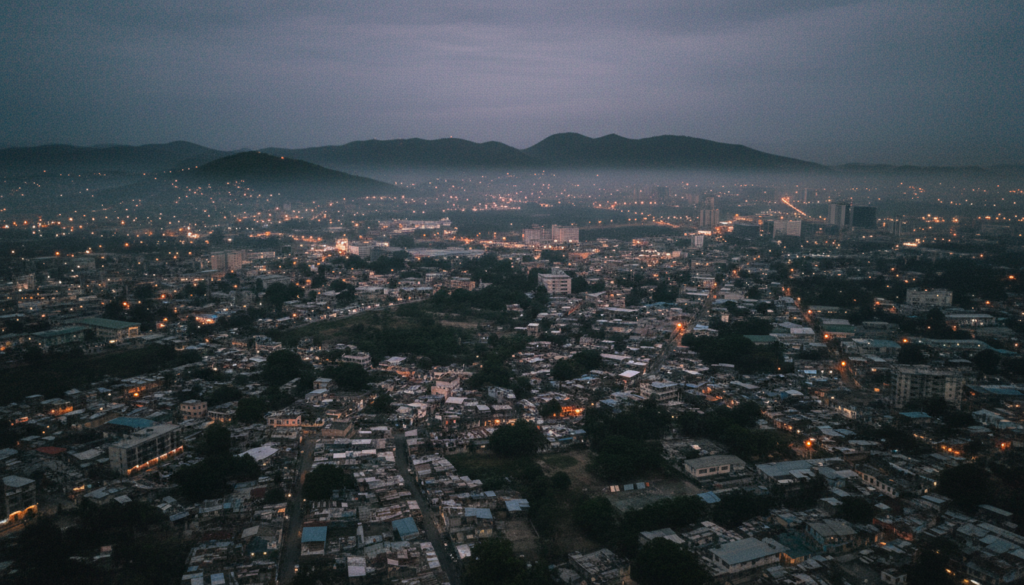
Haiti security crisis. Haiti humanitarian crisis. Haiti government crisis. It takes a view from orbit to see that Haiti’s situation is a crisis of systems, not just specific events. Daily life is squeezed from multiple directions. A chaotic capital city has neglected neighborhoods, normal neighborhoods, and neighborhoods devoid of life. Reports often say “gangs control the capital,” but that phrase is too clean for what it actually means. It’s not a single takeover. It’s a shifting map of control in Port-au-Prince, and the people living there are forced to adapt to it. Food, fuel and supplies become uncertain every time a new group takes ownership of the roads. How can hospitals treat people without these essential supplies?
This is the Haiti crisis in 2026.
To understand why Haiti exists like this, we must begin with this story’s origins, because the present did not suddenly materialize. Haitians have lived through cycles of instability and outside intervention for generations. In the second half of the 20th century, the Duvalier era left deep institutional damage—François “Papa Doc” Duvalier took power in 1957, and the dictatorship continued under Jean-Claude “Baby Doc” Duvalier until 1986. Those years hollowed out governance and normalized fear as a political tool. The country didn’t just lose time; it lost trust in systems that were supposed to protect humans just like you.
Then came the 1990s, a period that promised something different. Jean-Bertrand Aristide was elected president in 1990, then ousted in a 1991 coup, then returned in 1994. Even in that era of shifting power, the pattern was already visible: leadership changes did not automatically restore functional institutions. Haiti’s political life kept moving, but the floor under it remained unstable.
Haiti even had a President and his wife kidnapped in 2004. Randall Robinson detailed the events leading up to and after President Jean-Bertrand Aristide was ousted by international forces, culminating in the governmental instability to come. An Unbroken Agony: Haiti, from Revolution to the Kidnapping of a President (Amazon link) covers Haitian history from slavery to modern chaos.
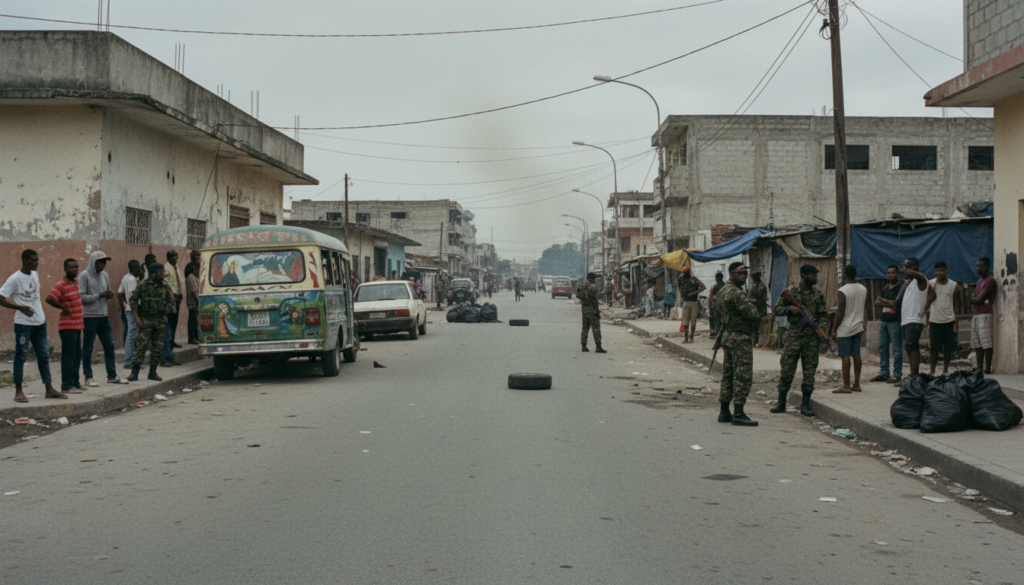
Fast forward to modern crisis milestones, and the names and dates repeat like warning signs foreshadowing today’s situation. In 2004, Haiti entered another major security and political rupture, and the UN Stabilization Mission in Haiti (MINUSTAH) was deployed that same year. MINUSTAH remained for years, and its legacy is tangled. It provided some security support, but it is also linked in public discussion to one of Haiti’s most painful public health disasters. Haiti’s first cholera outbreak began in October 2010, after the January 12, 2010 earthquake had already shattered infrastructure and overwhelmed the country.
That earthquake is significant because it reset Haiti’s modern timeline. Hundreds of thousands died, the capital was physically broken, and the recovery effort became a second, slower crisis: aid, reconstruction, and the long-term struggle to rebuild a functioning state under pressure.
For more information on the human’s affected by the earthquake, check out Fault Lines: Views across Haiti’s Divide by Beverly Bell (Amazon link).
The point isn’t that Haiti’s current crisis is “because of” any single past event. The point is that repeated shocks—political, economic, natural, and institutional—keep stacking. Each shock reduces resilience. Each shock makes the next one more dangerous.
And then, in the early 2020s, the situation in Port-au-Prince began to resemble something new: not just political instability, but territorial control by armed groups on a scale that disrupted the basic functions of a capital city. By 2022, the fuel terminal at Varreux had become a symbol of how quickly a single choke point can affect everything. When the Varreux terminal is blocked, fuel distribution becomes unstable, and when fuel becomes unstable, the whole city strains—transportation, electricity, hospitals, water systems, markets. Reuters reported a later disruption at that same terminal in April 2024, highlighting how persistent and strategic these pressure points have become.
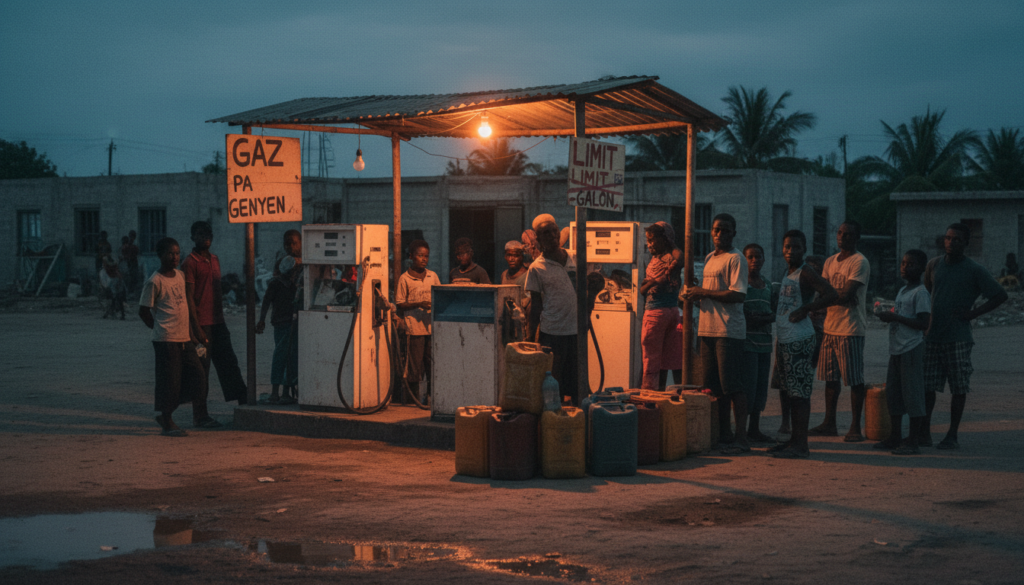
The Haiti crisis in 2026 becomes easier to understand if you stop thinking in terms of “events” and start thinking in terms of systems. A city doesn’t need constant gunfire to be in crisis. It only needs enough uncertainty to disrupt movement, enough fear to change routines, and enough instability to make normal services unreliable. That’s how “control” shows up: which neighborhoods can move freely, which roads can be used, which businesses can operate, which schools can open, and whether hospitals can count on supplies arriving tomorrow.
July 7, 2021 was a momentous day for Haiti. Haitian President Jovenel Moïse was assassinated. Haiti did not simply lose a leader; it lost what remained of political continuity. Since then, the country has struggled with a lack of elected leadership at the national level, and elections had repeatedly been delayed. By early 2026, Haiti still has not held elections since 2016, and the longer that gap continues, the harder it becomes to rebuild.
After Moïse’s assassination, Ariel Henry became Haiti’s prime minister, and he stayed in power through deepening insecurity until 2024. In March 2024, Henry said he would resign once a transitional council was established. He formally resigned in a letter dated April 24, 2024, and Haiti’s Transitional Presidential Council was sworn in on April 25, 2024.
Those were supposed to be stabilizing steps. But stabilization is not something you announce into existence. In practice, violence continued, displacement grew, and the crisis pushed the international community toward a security intervention model again—this time a UN-backed Multinational Security Support mission (MSS) led by Kenya. The mission has faced ongoing challenges in staffing, resources, and operational impact, and reporting has repeatedly highlighted the gap between the mission’s intended scale and what actually materialized on the ground.
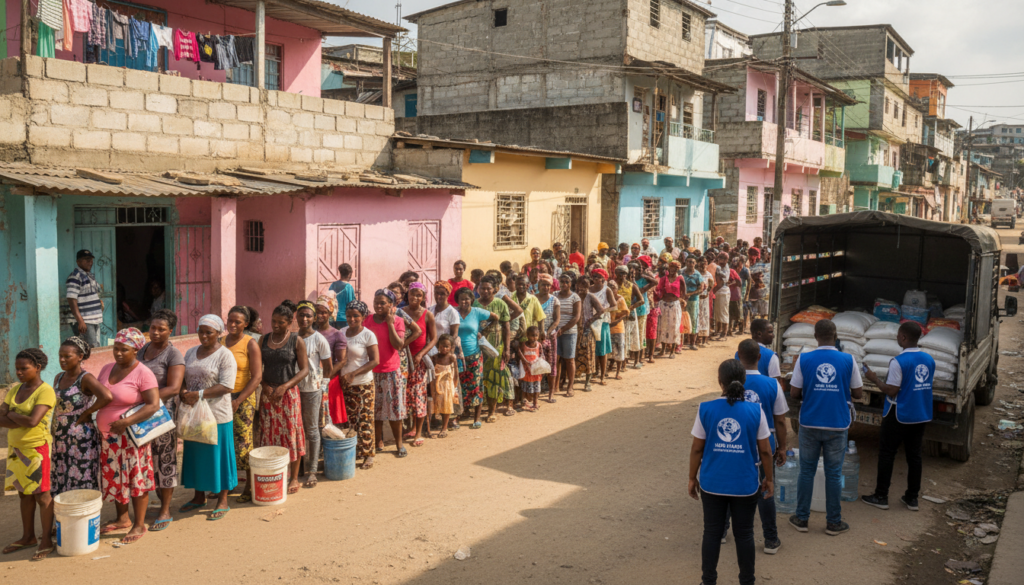
Meanwhile, the Haiti humanitarian crisis continues alongside the security crisis. Millions face food insecurity. Displacement has increased in and around Port-au-Prince. Humanitarian organizations keep operating, but their ability to deliver aid depends on safe corridors—roads, ports, and routes that can be disrupted quickly. The crisis doesn’t just happen to people in dramatic moments; it happens in slow erosion: higher prices, fewer safe routes, closed schools, medical supply gaps, and the constant need to assess risk before doing normal things.
This is also where Haiti’s crisis becomes regional. When instability persists, migration increases. Neighboring countries and North America feel that pressure. International diplomacy intensifies. Funding pledges appear. Missions are authorized. But the underlying strain remains: Haiti needs security that lasts, governance that can hold, and an economy that can breathe.
In late 2025, the UN Security Council authorized transitioning the MSS mission into a new structure aimed at confronting gang control, reflecting how the international approach was evolving in response to conditions on the ground. Then, in early February 2026, Reuters reported Haiti entering political limbo as the mandate of the Transitional Presidential Council expired without clear agreement on what governance structure replaces it—another sign that institutional continuity remains fragile even when plans exist on paper.
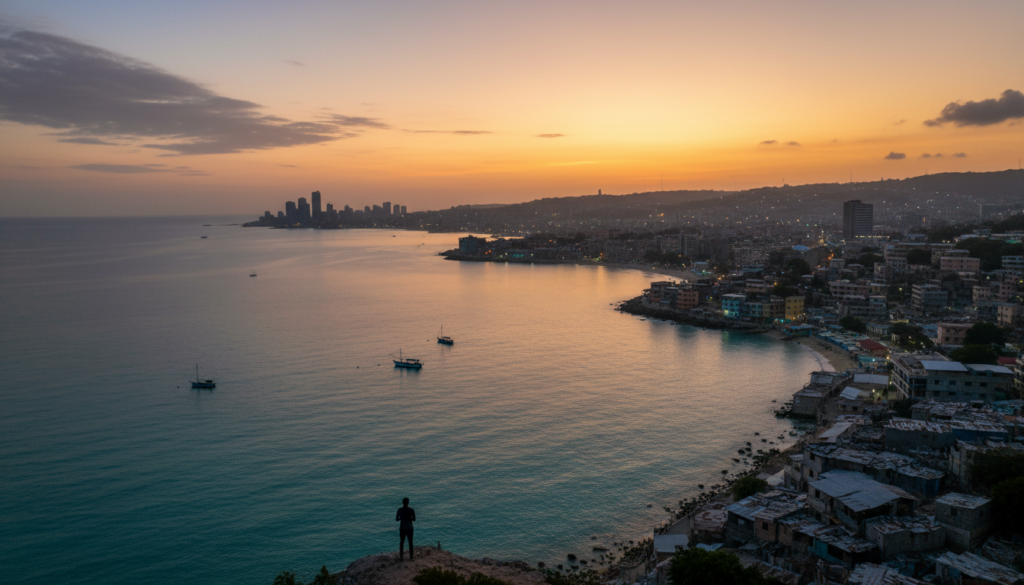
So where does that leave Haiti in 2026?
Not in a single moment of collapse. Not in recovery. Haiti is operating in a prolonged state of fragility—where security, governance, and economic stability are linked, and failure in one area spreads into the others. Port-au-Prince is the focal point because it’s the capital and because control over its infrastructure affects the whole country. But the crisis is not just a Port-au-Prince story. It’s a national story with national consequences.
Philippe Girard wrote a powerful history of Haiti and the situations leading up to the current day crisis. Haiti: The Tumultuous History – From Pearl of the Caribbean to Broken Nation (Amazon link) is worth the read, even for casual readers.
The question in Haiti is not whether something will “happen.” Things are already happening. The question is whether enough stability can be built, in enough places, for long enough, that the country can move from emergency management to actual rebuilding. That requires more than an intervention, more than a council, more than a single deployment. It requires continuity.
As of early 2026, Haiti remains under strain. The security situation is ongoing. The humanitarian crisis continues. International involvement remains active. Political transition remains unresolved. There is no single turning point yet—only the slow question hanging over everything: can the systems hold long enough to be repaired?
References:
United Nations Peacekeeping. “MINUSTAH Background and Mandate.”
Reuters. “Haiti Fuel Terminal Operations Halted as Gangs Seize Trucks, Source Says.” April 22, 2024.
Reuters. “Haiti Enters Political Limbo as Transition Government’s Mandate Ends.” February 7, 2026.
U.S. Congressional Research Service. “Haiti: Recent Developments and U.S. Policy.” CRS Insight.